Linear Inches

Linear Inches
A large percentage of our projects ask vendors to collect linear inch data in a store. This is done by measuring the length of a shelf or a rack. To do this, please review the article "Measuring Space". To simplify things, we are going to utilize those good old math skills you learned in elementary school, Multiplication!
Below is an example of a boot shelf at Academy.
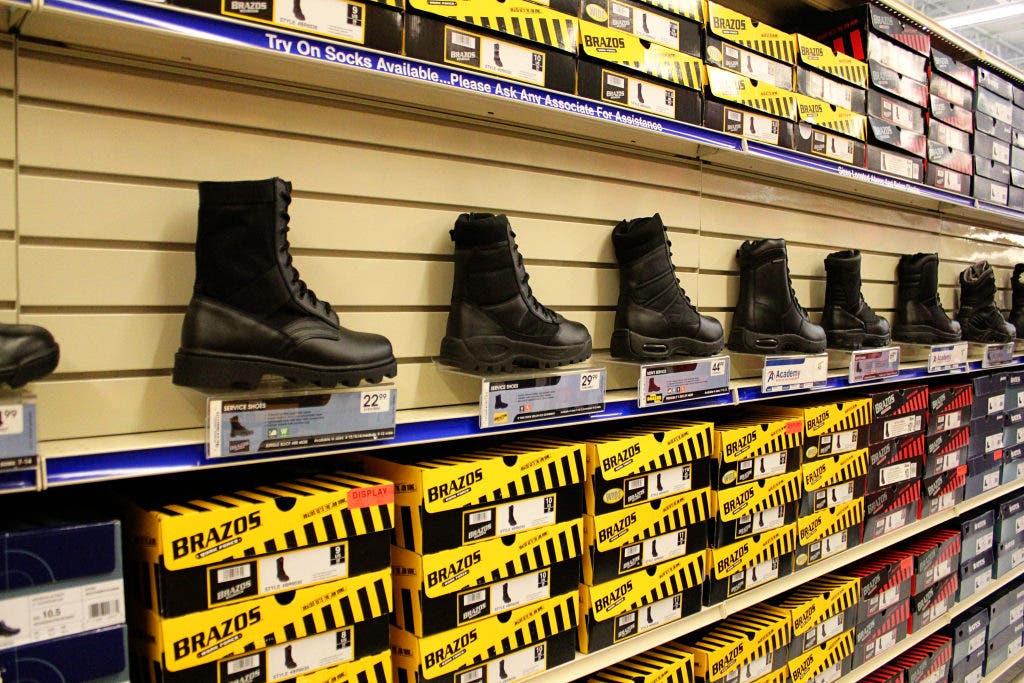
To measure this space for the boots you would do the following steps:
Step 1: Measure the length of the aisle in inches (utilize whichever method you prefer).
Step 2: Count the Shelves in the aisle - 5 shelves (six if there is product located on the top shelf).
Step 3: Calculate aisle linear inches - (Aisle inches) X (# of Shelves) = Linear Inches for 1 aisle of boots.
Step 4: Subtract out empty space - For example, let's say that about 10% of the space is empty. (Put those estimation skills to work!) Simply subtract out 10% from your total, and that is your aisle total.
Step 5: Now that you have your aisle measurement, go through each boot aisle and repeat step 2 through 4.
Step 6: Add up all of your aisle totals to get your Total Linear Inches for Boots.
In this example below, there are multiple boxes stacked up on one shelf, please remember you only need to multiply by the number of shelves NOT the number of rows of boxes on a shelf to arrive at your linear inch total.

KEY ITEMS TO REMEMBER
-
If you are measuring aisles in a store, they should all be about the same length, measure once and throw math at it. Measure one aisle and multiply by number of aisles, etc.
-
We don't count empty space (unless specifically specified in a project), so estimate and subtract.
-
We collect measurements by category, so it is easiest to measure a whole category before moving on.
Comments
0 comments
Article is closed for comments.