Tables & Shelves

Tables and shelves may be freestanding or attached to a wall unit. Shelf and table displays are counted in linear inches, which you will learn about here. The important thing to remember is that each face or shelf of the display is counted individually.
Shelves can have multiple levels, which would need to be measured in linear inches individually. Items are usually folded and stacked onto the shelves; again, our interest is in linear inches the product takes up on the retail floor. The picture on the left would be linear inches of shelf length multiplied by 3, since there are 3 rows of shelving on this side of the display. This process would be repeated for the other side of the shelf, given it also displays shelves of tops. The picture on the right shows 7 shelves of shoes, to be measured in linear inches x 7.


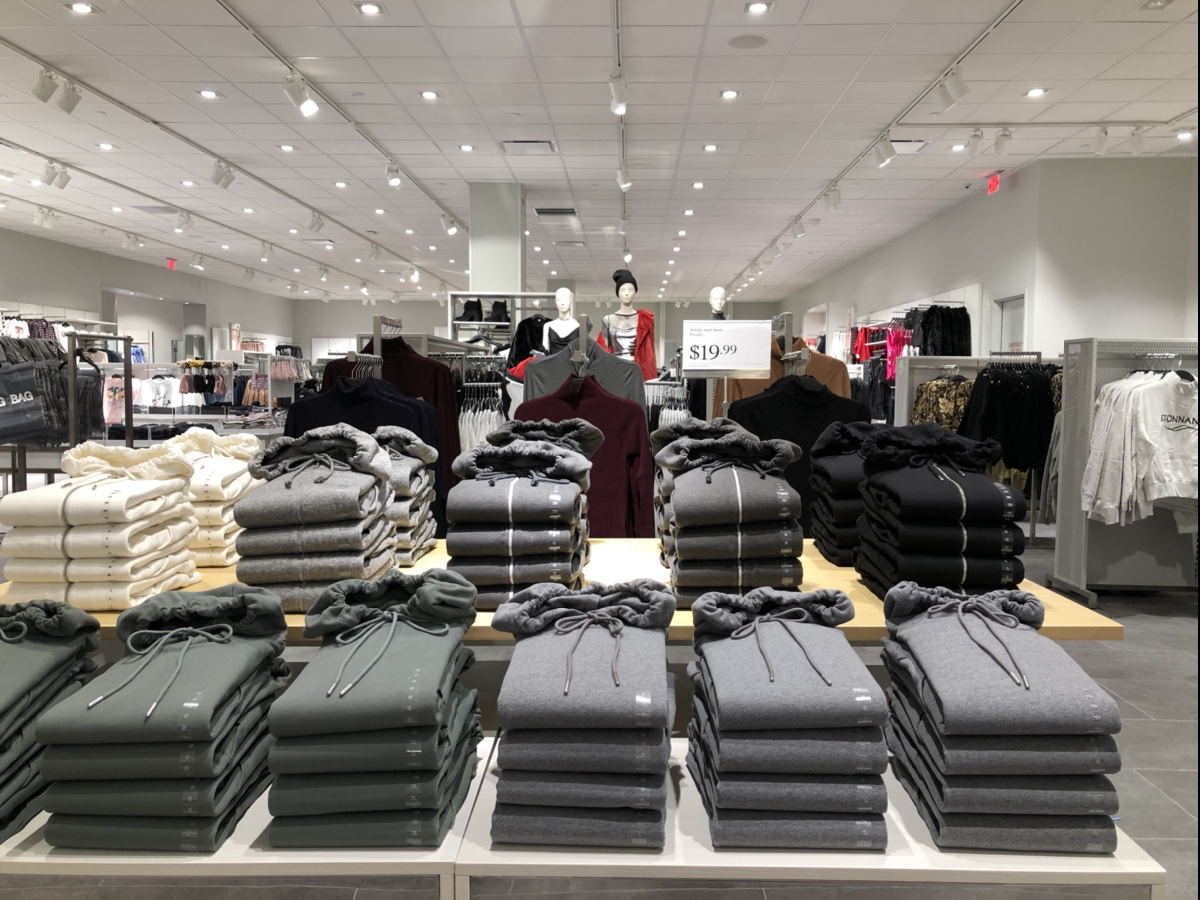
Table displays are typically free standing, and quite literally look like a table. Items are typically folded or strategically placed on the display so consumers are able to easily access the individual items. On the left is a table display of Men's sweatshirts. Pictured are two separate tables, to be recorded as 2 displays of Men's Sweatshirts. In the image on the right, handbags are displayed on table displays. Remember, each face of the display is counted. Each display is composed of 4 tiers of table, and each display would be recorded as 4 displays of handbags.

Items may also be displayed in a "cubby" system. Cubbies are box-like shelf units that house products. In the below picture on the left, you will see a multi-sided cubby system, each side holding 4 cubbies. You would record this as 16 displays of T Shirts, given the other 3 sides also have t shirts in them. In the image on the right, you would count the amount of cubbies on the wall; there are 15 pictured.


Comments
0 comments
Article is closed for comments.